
There are victories that settle a match and victories that give people something to carry into the next day.
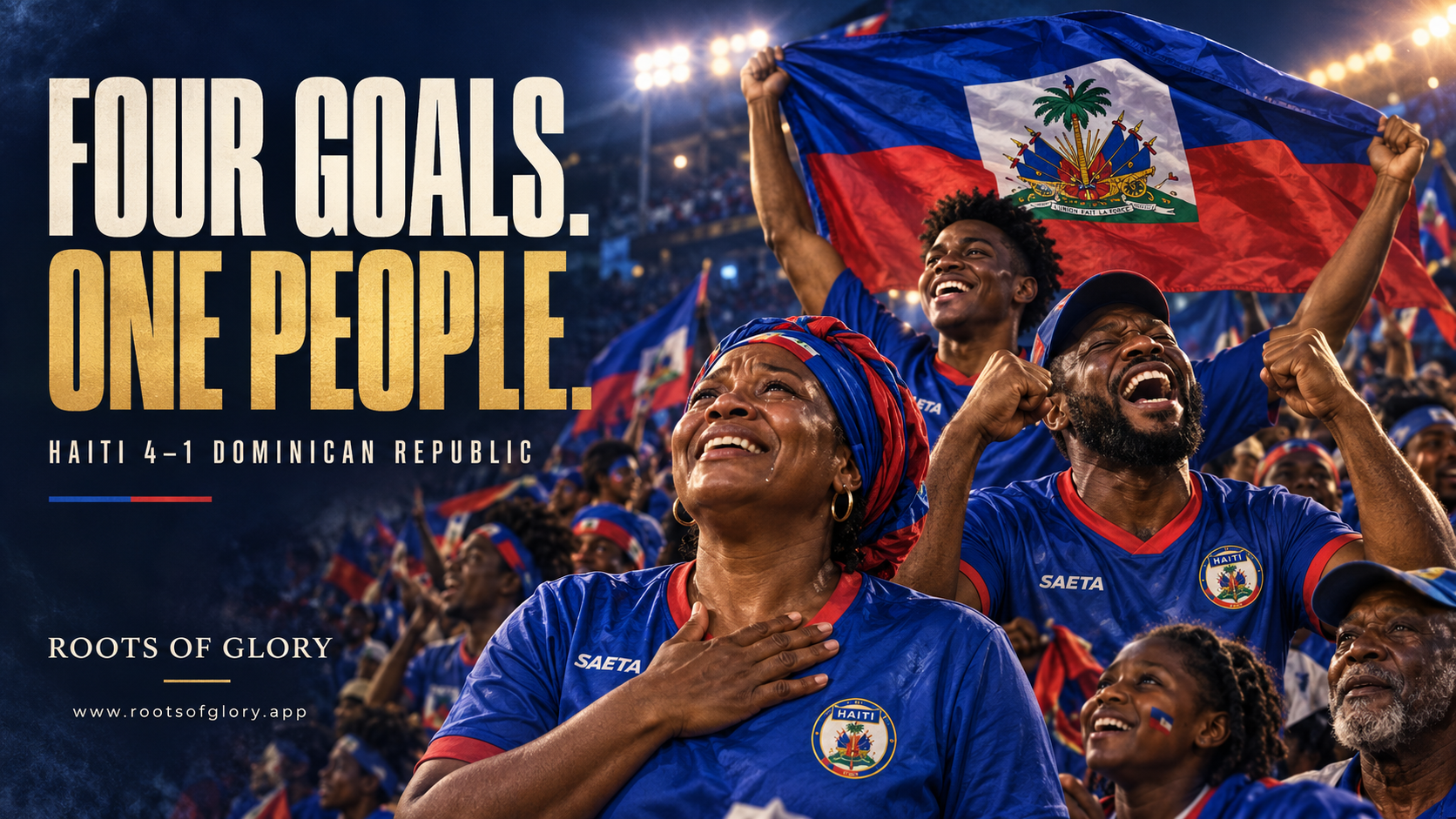
Haiti’s 4–1 win over the Dominican Republic on October 1 offered both. Away from home, against a neighboring rival, Les Grenadiers delivered a result that deserves to be remembered first for the football: four goals, three scorers, and a response when the game threatened to become uncomfortable.
Louicius Deedson opened the scoring in the tenth minute. Wilson Isidor doubled Haiti’s advantage shortly after halftime. When Dorny Romero pulled a goal back for the hosts, the contest was alive again. Haiti answered through Isidor’s second goal, before Yassin Fortuné completed the scoring. Those details matter. The final margin came from a team that continued to produce after its opponent found a way back into the match.
For supporters, a performance like that makes pride tangible. It gives people goals to replay, players to praise, and moments to argue over. National feeling takes shape in something specific: a forward finishing his chance, a team protecting its advantage, another goal arriving when everyone wants reassurance.
The crowd gave that feeling a visible presence. The Dominican federation reported more than 23,000 spectators at Estadio Olímpico Félix Sánchez. AFP’s account described Haitian residents of the Dominican Republic and supporters who had crossed the border as making up the majority of the attendance. Haiti was the visiting team, but many of the people watching had come to stand behind its colors.
That distinction between the fixture and the feeling is especially meaningful for this team.
Haiti’s home matches in this Nations League group stage took place at Sabina Park in Kingston, Jamaica. Les Grenadiers beat Trinidad and Tobago there, then Costa Rica. The trip to Santo Domingo was an away assignment, following two home fixtures already played outside Haiti.
A stadium address can tell us where a match happens. It cannot fully describe where a team belongs.
For a supporter living abroad, following Haiti can be one way of keeping a relationship with the country present. For someone raised outside Haiti, the national team can offer an entry into a family inheritance: a name, a flag, a language, a story that existed before them. For someone watching from Haiti, the same shirt represents home directly. These experiences differ, but the match gives them a point of connection.
No single victory can speak for every Haitian. It can, however, make space for a shared celebration without requiring everyone to have the same life.
The aftermath of the match has brought controversy and official complaints. Those developments require accurate reporting of their own. They should also leave room for the players’ achievement and the supporters whose attachment to Haiti does not depend on hostility toward anyone else.
Haitian pride is large enough to celebrate a convincing win and respect the people on the other side of the pitch. The result needs no exaggeration. Haiti scored four, conceded one, and left Santo Domingo with the victory.
For Roots of Glory, that is where the lasting story begins: with the football and the people who recognize something of themselves in it.
Four goals gave those supporters a result to celebrate. The meaning they carry from it belongs to them.
Sources & further reading
- Dominican federation match report Source checked
- AFP reporting in Le Parisien Source checked
- Concacaf’s group-stage reporting Source checked