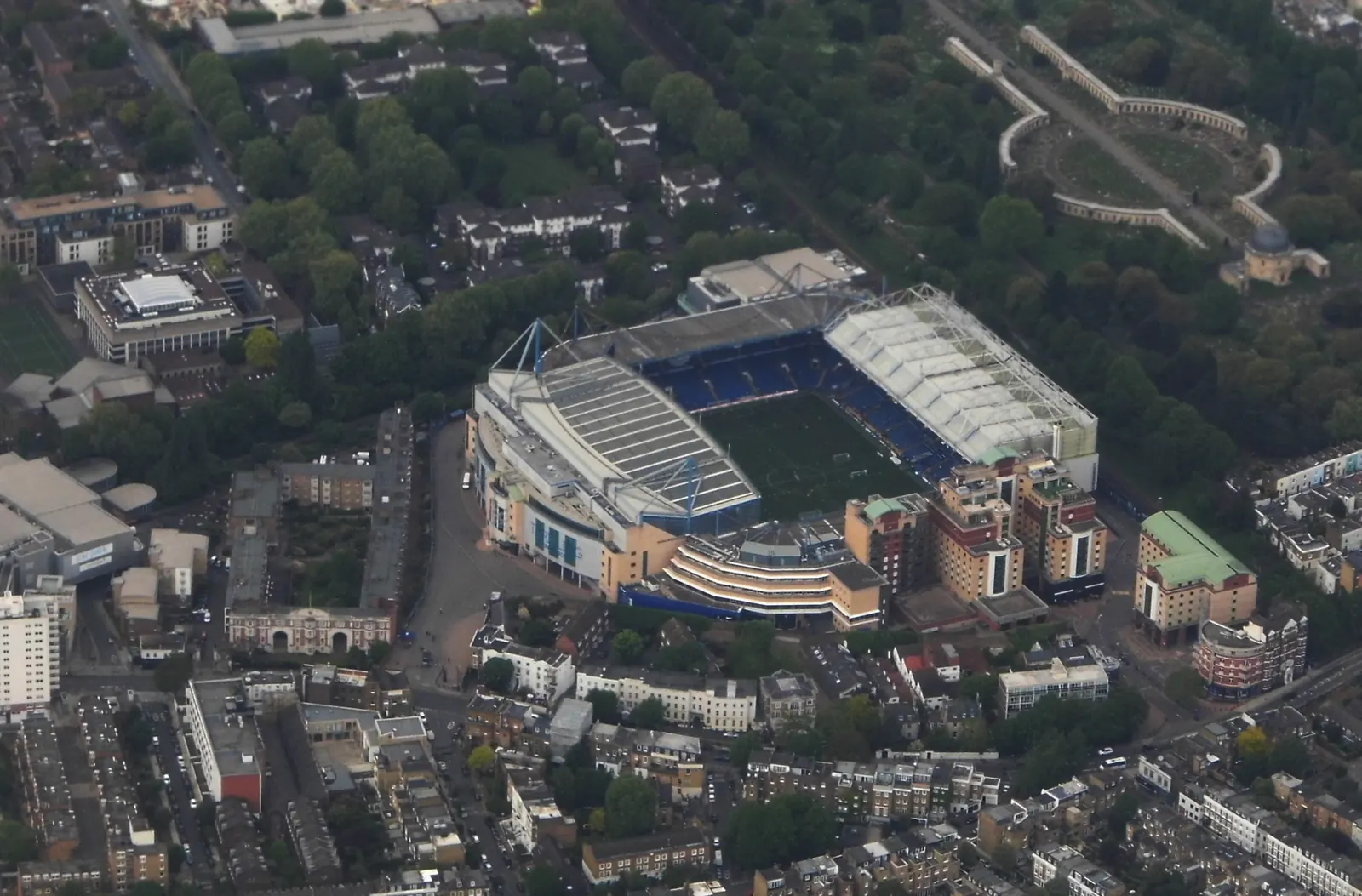

Stamford Bridge was already a place for sport when Chelsea came into existence. The club dates the ground's opening to 1877 and identifies the London Athletics Club as its early occupant. Chelsea's founding came in 1905, leaving almost three decades between the beginning of the venue and the beginning of the football club. Chelsea's account of other sports at the Bridge
That order matters. The stadium was not simply a structure added after a team had established itself. A sporting place preceded the institution that would become its defining association. For a reader approaching Chelsea through football, the older date opens a second timeline beneath the familiar one.
The club's founding history places the decisive meeting on March 10, 1905, at the Rising Sun pub across from the ground. Its account also records that Kensington FC, London United and Stamford Bridge FC were among the names considered. Chelsea was a choice made during the creation of the club, rather than the inevitable name of a team already playing there. Chelsea's founding account
Athletics did not disappear at the moment of that choice. The same history records meetings at Stamford Bridge in June 1905, before the football side had played a match there. The London Athletic Club continued to use the redeveloped facilities in summer. This early overlap makes the transition easier to understand: the site could accommodate an emerging football calendar alongside an existing sporting use.
Later years added further layers. Chelsea's history of the venue records a cricket match between the touring West Indies team and Essex in the summer of 1980. Rain prevented a complete game. In 1981, Stamford Bridge also staged matches in the experimental Lambert & Butler Floodlit Trophy. Club history of the ground's sporting uses
These examples change the way the ground can be read. A running track and a cricket boundary organize movement differently from a football pitch. Using the same venue does not make those sports interchangeable; it shows how an established place can be adapted to another kind of contest and another audience. The 1980 visit also puts a West Indies sporting connection inside the stadium's documented history, without requiring an invented account of who attended or how they felt.
Women's football has its own early chapter at the ground. Chelsea's historical account describes a 1920 match between Dick, Kerr's team and France's Femina Sport at Stamford Bridge, with the visitors winning 2–1. This belongs to the venue's history of women's football, without making either visiting team a historical version of Chelsea's own women's side. Chelsea's account of early women's football at the Bridge
The result is a fuller picture of a football home: a venue inherited from athletics, a club named through deliberation, and a ground reused for different sporting purposes. Chelsea is central to that history. The earlier and adjoining chapters help explain the place Chelsea occupies.
Sources & further reading
- Chelsea: Six facts about the founding Source checked
- Chelsea: Whole new ball game Source checked
- Chelsea: Early women’s football at Stamford Bridge Source checked