.jpg)
Manchester United won the 1948 FA Cup before returning to a rebuilt Old Trafford. That sequence puts an often overlooked detail inside a familiar account of football recovery: the team was developing while its home ground was still being restored.
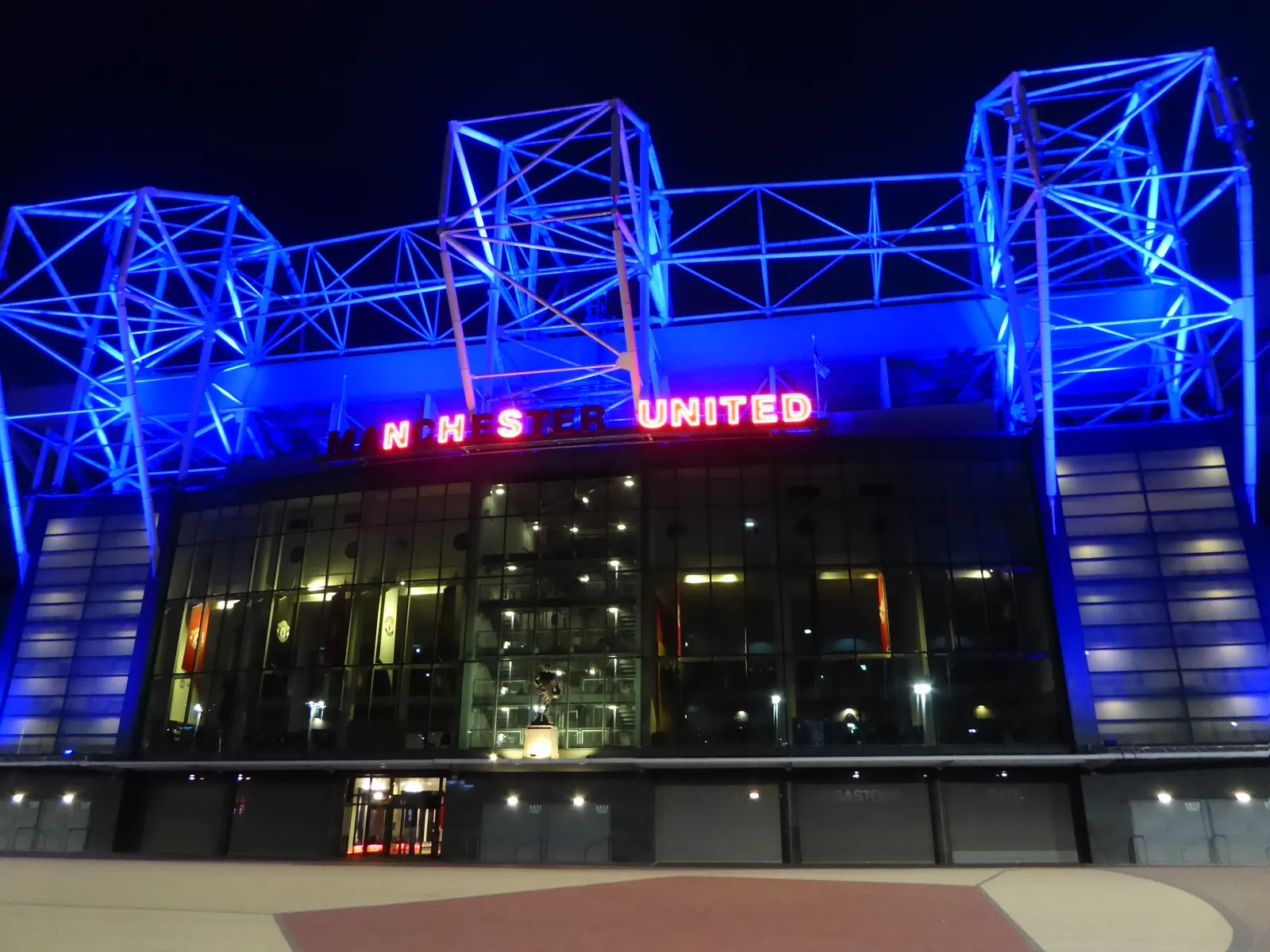
Old Trafford had opened with a match against Liverpool on February 19, 1910. United's history records a 4–3 defeat and the move from Bank Street to a stadium whose construction had been supervised by architect Archibald Leitch. The new ground gave the club a different setting for its next stage; United won the league in its first full season there, 1910–11. United's 1910s history
The interruption came during the Second World War. A German air raid on March 11, 1941, destroyed the main stand, dressing rooms and offices, according to the club's account. The damage affected the places from which a club operates as well as the places from which supporters watch. Restoring a functioning stadium would require more than preparing a playing surface. United's 1940s history
Manchester City's own history records that it offered United a home and that the two teams played at Maine Road from 1946 to 1949. It also notes that the derbies between 1947 and January 1949 took place there while Old Trafford was rebuilt. For that period, being designated the home team in the fixture did not necessarily mean playing in a stadium associated only with that club. Manchester City's derby history
The sporting reconstruction had its own timetable. Matt Busby joined United in 1945, and the club finished second to Liverpool in the 1946–47 league season. The following year brought victory over Blackpool in the FA Cup final. Those achievements belong to the period before Old Trafford's reopening, rather than to a story in which the building was repaired first and football progress followed. United's postwar chronology
United's corporate history dates the reopening to August 24, 1949. It records further changes in the following decade: floodlighting in 1957 and completion of a project to cover the stands in 1959. Reopening and finishing every improvement were different milestones. The ground continued to change after competitive football had returned. Manchester United's stadium chronology
The shared-ground years add a practical dimension to the relationship between Manchester's clubs. Rivalry remained part of their football, but one institution's stadium also provided the setting in which the other could continue. No imagined conversation between supporters is needed to make that connection visible; it is there in the venue history.
Old Trafford's importance becomes clearer when the years away are included. A club's home is both a physical place that can be damaged and rebuilt, and a set of sporting routines that may have to continue elsewhere. United's postwar recovery required both forms of continuity.
Sources & further reading
- Manchester United: History, 1910–1919 Source checked
- Manchester United: History, 1940–1949 Source checked
- Manchester City: Sibling Rivalry, a history of the Manchester derby Source checked
- Manchester United: Corporate history and stadium chronology Source checked